Line Reactors
Input to Inverter / Drive
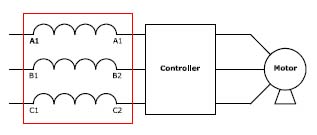
On the input of an electronic controller, line reactors protect sensitive electronic equipment from electrical noise created by the drive or inverter (nothing pulsed distortion, harmonics). They also protect the controller from surges or spikes on the incoming power lines, as well as reduce harmonic distortion. They help to meet the requirements of IEEE 519
Multiple Controllers
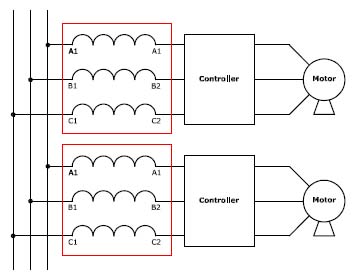
Multiple drives or inverters on a common power line require one reactor per controller. Individual reactors provide filtering between each controller (reduce cross talk) and also provide optimum surge protection for each unit. A single reactor serving several controllers does not provide adequate protection or filtering when the system is partially loaded.
Load Reactors
Output of Inverter / Drive
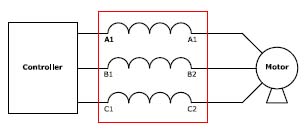
The use of reactors between a controller and a motor (or other load) protects the controller from either a short circuit in the load or a surge in output current. It accomplishes this by limiting surges.
Reactors also reduce operating temperature and audible noise in motor loads. Harmonic compensation of all Guard-AC reactors allows standard units to be used here with confidence. They improve waveform integrity, thus enhancing motor performance and system efficiency.
Multiple Motors
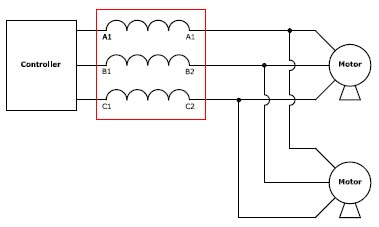
When more than one motor is controlled by a single drive, a single reactor can typically be used between the controller and the motors, as illustrated. The reactor should be sized based on the total motor/load horsepower.